
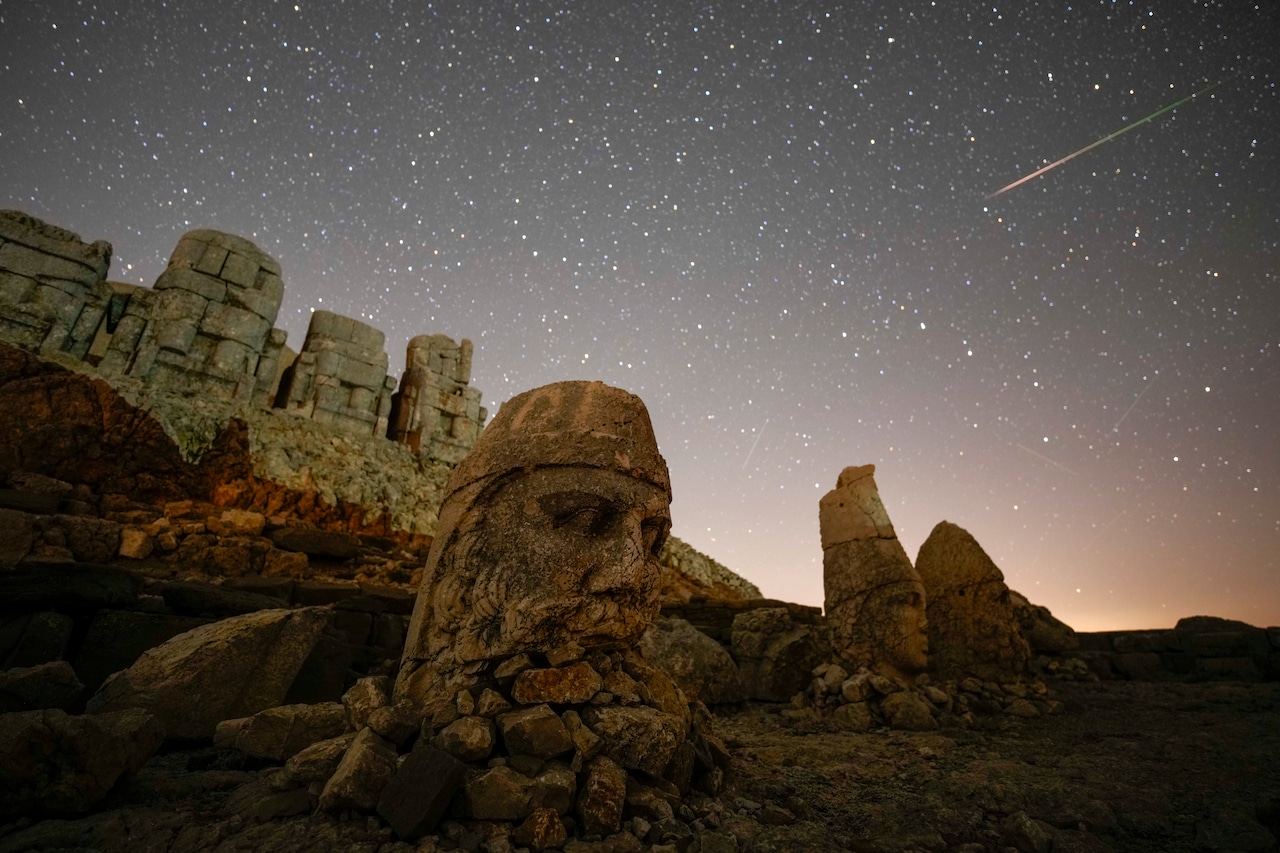
The most popular meteor shower this side of the universe is about to reach its peak, with large, colorful fireballs on track to glow across the night sky.
Between 10 p.m. and the end of the predawn hours on Aug. 12 and 13, stargazers should have the chance to see the Perseid meteor shower reach its peak, according to NASA.
As the Perseids appear, they typically leave behind long “wakes,” or brief glows of light and color behind them, the space agency stated. The meteor shower typically has around 25 meteors flying through the sky per hour, but as many as 50 to 100 can be seen.
However, a waning gibbous moon in the sky could dampen any anticipation for a flurry of meteors.
“The average person under dark skies could see somewhere between 40 and 50 Perseids per hour,” Bill Cooke, lead for NASA’s Meteoroid Environments Office, said in a NASA report. “Instead, you’re probably going to see 10 to 20 per hour or fewer, and that’s because we have a bright Moon in the sky washing out the fainter meteors.”
While the radiant point (the direction from which the meteors appear to come from) will be in the direction of the constellation Perseus, Cooke recommended that stargazers should “look anywhere but the moon.”
Despite the moon’s light, areas free from light pollution are best for viewing the meteor shower’s peak. In Massachusetts, this includes Kenneth Dubuque Memorial State Forest in Hawley, Lake Dennison State Park in Winchendon and Wachusett Mountain State Reservation in Princeton, according to Go Astronomy’s Dark Skies page.
If you purchase a product or register for an account through a link on our site, we may receive compensation. By using this site, you consent to our User Agreement and agree that your clicks, interactions, and personal information may be collected, recorded, and/or stored by us and social media and other third-party partners in accordance with our Privacy Policy.