
In September 2024, when Fire Systems Inc. notified Fall River’s Gabriel House assisted living facility of long-recalled sprinkler heads in the building, the company offered a free, full survey and warned of potential failure should a fire break out.
The notices went ignored by Gabriel House management. That’s according to new details filed in Bristol County Superior Court Monday as part of cross-claims submitted by Fire Systems Inc. (FSI) — the North Dartmouth-based company contracted to perform fire inspections at the now-embattled facility.
FSI contends Gabriel House owner Dennis Etzkorn and his staff knew about the presence of recalled sprinkler heads 10 months prior to the fatal blaze that ultimately killed 10 people on July 13, the deadliest fire in Massachusetts in more than 40 years.
- Read more: Fire safety reforms are hard to enact. Will anything be different after Gabriel House deaths?
FSI is named as a defendant, alongside Etzkorn, in several ongoing personal injury and wrongful death lawsuits stemming from the fire.
But in its new filing, FSI claims it shouldn’t be, because Gabriel House, or Gabriel Care Inc., “is responsible for the failure to replace the recalled sprinkler heads at the facility,” according to a statement from an FSI spokesperson.
Meanwhile, Etzkorn has filed his own cross-claim against Fire Systems Inc. His spokesperson, George Regan, told MassLive Monday night that Etzkorn is “confident that the evidence we will present at trial will clearly establish that all liability rests with FSI.”
“FSI’s failures not only amount to breaches of its contract with Gabriel Care, recklessness, negligence, misrepresentations, and fraud, but also were a direct cause of the deaths of ten Gabriel House residents,” Etzkorn’s filing states.
Sources with knowledge of the ongoing fire investigation have told MassLive the sprinkler system didn’t activate in the second-floor room where the flames started. The system was also missing a critical internal inspection that is mandated every five years, echoed in the new court filings and previously reported by MassLive.
In his cross claim, Etzkorn publicly states for the first time that the sprinkler system failed to function properly, causing the fire, heat and smoke to spread throughout the facility.
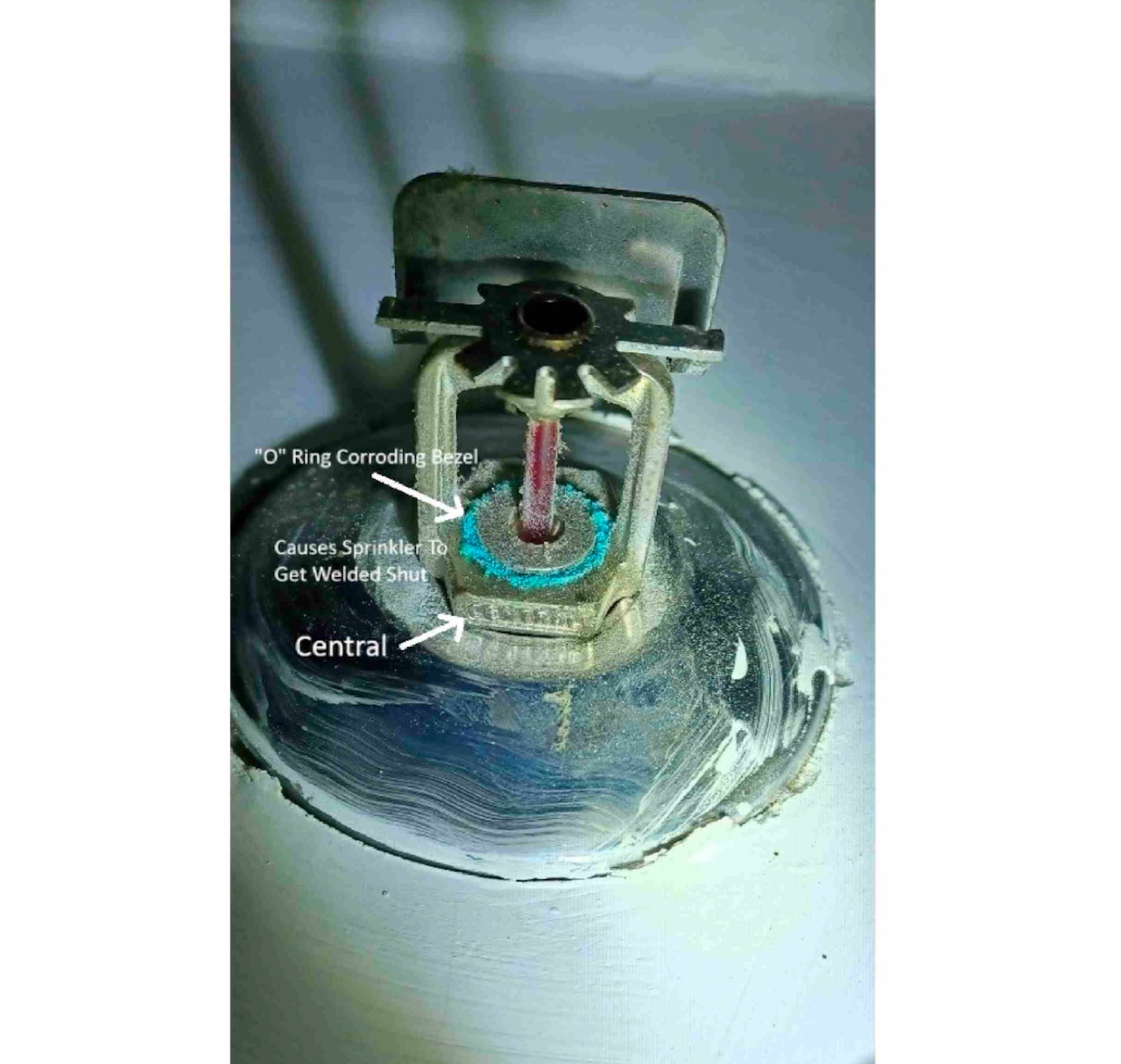
In the aftermath, Fall River Fire Chief Jeffrey Bacon announced his department discovered recalled sprinkler heads in other congregate living occupancies in the city, as well. He encouraged other departments across the state that they, too, should be checking for the Central Sprinkler Company heads that were recalled more than 20 years ago.
The recalled sprinklers, approximately 35 million of them, were subject to nationwide recalls in the late 1990s and early 2000s because of their “O-ring seals,” a component that can corrode and cause the sprinkler heads not to activate in a fire.
Previously, Etzkorn said his sprinkler system was inspected five days prior to the fire and found to be in working order. But in his court filing Monday, he contended that FSI “failed for years” to properly inspect and test Gabriel House’s sprinklers.
He claims FSI also failed “on a regular basis” to include deficiencies in its inspection reports, “even deficiencies obvious to the trained eye, which required corrective action,” Reagan said.
Etzkorn’s cross claim says that FSI “certified on a quarterly basis that ‘all sprinklers [are] in good condition, not obstructed and free of corrosion.’”
What did FSI do at Gabriel House?
In its new court filing, FSI wrote that, under its service agreement with Gabriel House signed in 2014, the company made four site visits annually and provided ownership with “inspection reports documenting deficiencies FSI inspectors found that required corrective action.”
Under state law, those reports are required to be made available to local fire departments during annual fire safety inspection processes, essentially showing fire officials that contractors have signed off on a building’s fire suppression systems.
Etzkorn states that the Fall River Fire Department relied on FSI’s reports to sign off on its building safety inspections every year.
Despite several lawsuits claiming otherwise, FSI maintains that it did not design, install, maintain or repair Gabriel House’s fire suppression systems.
Discovering the recalled sprinkler heads
According to FSI’s court filing, in September 2024, an inspector identified fire sprinkler heads installed at Gabriel House that had been subject to a manufacturer recall more than 20 years ago.
Under National Fire Protection Association standards, which are adopted as state law in Massachusetts, the legal responsibility to identify and replace recalled sprinkler heads — and sprinkler upkeep in general — lies with property owners, not contractors or inspectors.
“Nevertheless, if an inspector becomes aware that a component has been recalled, it is incumbent on the inspector to notify the owner in writing so that the owner can promptly replace the recalled product to ensure the system will operate properly,” FSI wrote in its court filing.
FSI maintains that the company “immediately notified” Gabriel House in writing about the recalled sprinkler heads needing replacement, and spoke with a maintenance manager on-site.
Separately, an FSI manager contacted the Gabriel House property manager by phone and “again made clear that certain sprinkler heads being used at Gabriel House had been recalled and needed to be replaced because they might not operate in the case of a fire,” the court filing states.
FSI said it offered to send its technicians back to do a full survey of the building to identify all impacted sprinkler heads and determine a replacement cost estimate.
Court documents show FSI Fire Protection Manager Pierre Lemieux sent an email to the Gabriel House property manager on Sept. 17, 2024.
According to a copy provided in court documents, the email stated:
“Our Inspector noted the presence of Central ‘GB’ Sprinklers at your facility last week.
As you may know, these sprinklers are under a mandatory recall by their manufacturer, Central Sprinkler Corp. and the US Consumer Protection Agency.
These heads are known to malfunction due to defective ‘O’ Rings which may cause the head to be welded close preventing operation during a fire or may arbitrarily go off without notice.
About 10 million of an estimated 30 million of these sprinklers have been identified, removed, and replaced since 1999 and the effort is still on-going.
Due to an identification brochure produced and released by Tyco Fire Protection Products, it has made it easier to identify these heads, although they resemble many other brands of sprinklers.
We propose to survey your facility and identify all the defective GB sprinklers and provide a replacement cost & strategy to bring your facility up to compliance with Life Safety and NFPA. This survey will be done free of charge.
Please review the attached pictures and brochure and respond with the most convenient day/time for the survey.”
The court filing goes on to state, “To FSI’s knowledge, the (Gabriel House) defendants never responded to this email and never replaced the impacted sprinkler heads.”
Photos included in FSI’s court filing show corroded sprinkler heads with an arrow specifying “causes sprinkler to get welded shut.”
FSI says it was given a post-fire investigation report that indicates recalled sprinkler heads “at multiple locations” inside Gabriel House.
A spokesperson said the filing “corrects a number of false public statements Gabriel House has made about FSI in the aftermath of this tragedy.”
What Etzkorn says
Etzkorn’s opposing filing, also filed in court Monday, contends FSI’s email never made it to him or anyone involved in the care and maintenance of the Gabriel House building.
Speaking on behalf of Etzkorn, Regan said they anticipated FSI “will rely upon a single email sent in September 2024 advising for the first and only time that some of the sprinklers in the Gabriel House may have been recalled by the manufacturer and the US Consumer Protection Agency.”
But Etzkorn says 10 years went by in Gabriel House’s service agreement with FSI, starting in June 2014, without the company notifying him of “the recall or any issues with the sprinklers, including issues related to corrosion.”
In his court filing, Etzkorn attached a report from FSI’s July 8 inspection and testing, five days before the fire.
The report “did not set forth in the comments section… or otherwise that there were deficiencies in the sprinklers, which required replacement of any sprinkler heads as a result of its inspections or the decade old industry recall related to the sprinklers installed within the Property,” he wrote.
“All liability should fall on FSI, not Gabriel Care, in the underlying action,” Etzkon’s filing argues.