
Ruth Balser was a fledgling state lawmaker when five people perished in a business complex fire on Route 9 in Newton.
It was Feb. 9, 2000, when wind-fueled flames consumed 200 Boylston St., conjuring billowing smoke into a crisp blue sky in the middle of the afternoon. At the time, the Chestnut Hill address had approximately 40 businesses across three buildings.
When all was said and done, five people and a dog were dead. It would later be revealed the fire alarm system was inoperable at the time, a fire exit was blocked and building inspections had been missed over the years. Because the complex was constructed in the 1950s, there were no sprinklers.
The property owner was ultimately found negligent in a civil trial for several fire code violations.
Balser’s “eyes and ears perked up” over the tragedy in her district. She later learned in conversations with state fire officials that a multiple-fatality fire was extraordinarily rare if a building had an automatic sprinkler system.
“Over the years, when I read about someone dying in a fire, I’d start crying because it’s so unnecessary,” said Balser, a Democrat who retired last year after 26 years representing the 12th Middlesex District. “This is a really preventable death. That’s what having automatic sprinkler systems do. They save lives.”
And yet, Balser faced an arudous uphill battle to pass legislation on Beacon Hill related to sprinkler systems and fire codes. She isn’t alone — MassLive has spoken with dozens of legislators and fire officials in recent months who have detailed how challenging it can be to revamp and update fire safety measures, both in Massachusetts and across the country.
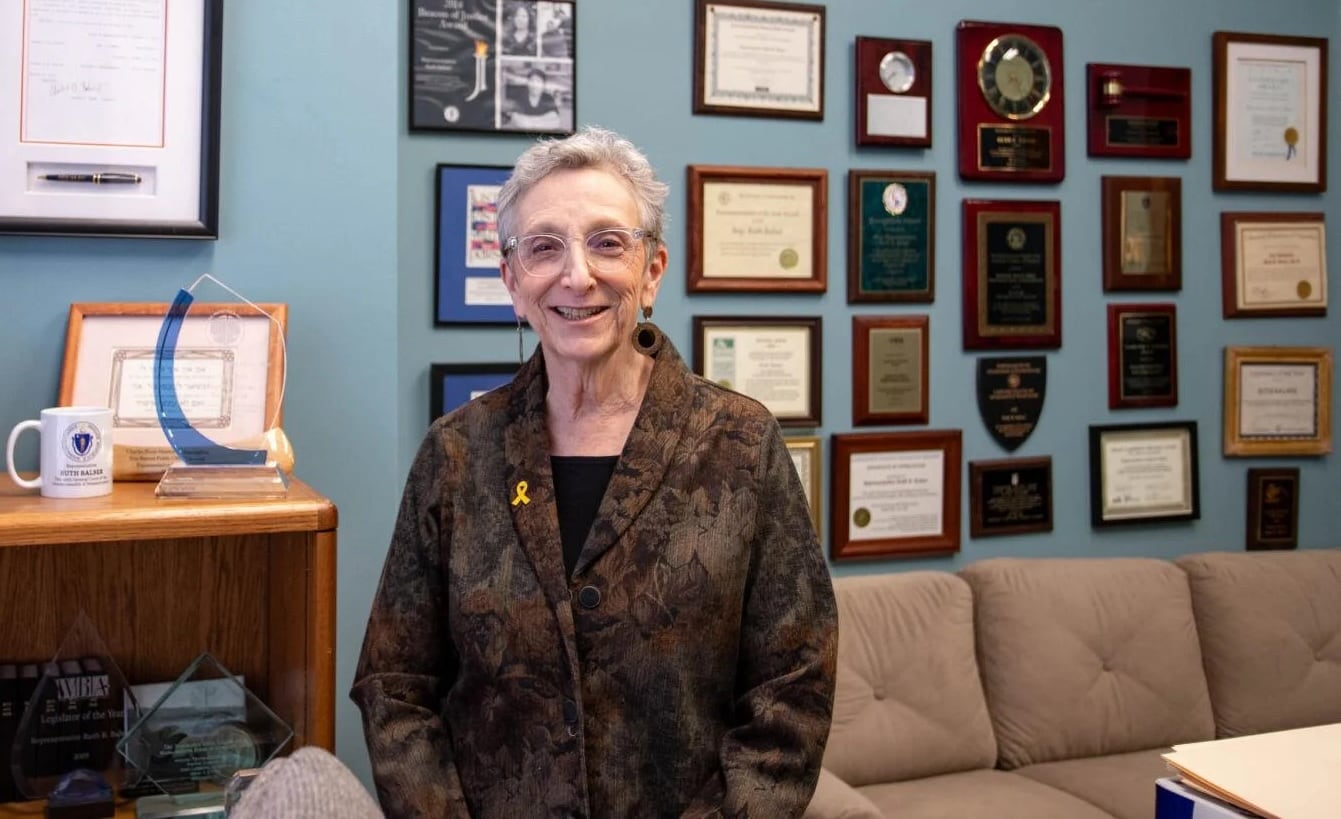
Former State Rep. Ruth Balser, D-12th Middlesex, poses in her State House office on Sept. 25, 2024, before her retirement that year. During her 26 years in the Legislature, she fought hard to improve fire prevention and safety. She spearheaded the passage of a law requiring automatic sprinkler systems in older buildings of 7,500 square feet or more. (State House News Service photo).
With the devastating Gabriel House assisted living fire in Fall River likely to hit the Legislature, the question arises: if the state’s deadliest fire in more than 40 years doesn’t spur changes, what will?
Legislators haven’t announced any concrete plans of their own yet to pursue specific measures on Beacon Hill. Instead, they’re letting Gov. Maura Healey and the state’s Assisted Living Residences Commission take the lead.
- Read more: Mass. officials launch effort to strengthen assisted living fire safety, inspection coordination
Often putting up obstacles — and heavy influence — in state houses are lobbyists representing home builders associations that oppose additional mandated construction costs amid a persistent housing crisis. Instead, the industry contends, Massachusetts should focus its efforts on ensuring fire alarms are installed and in working order, which is already required by state law.
Compliance, however, can be spotty, and it’s not uncommon to see fire department press releases highlight the absence of working alarms in residences struck by flames.
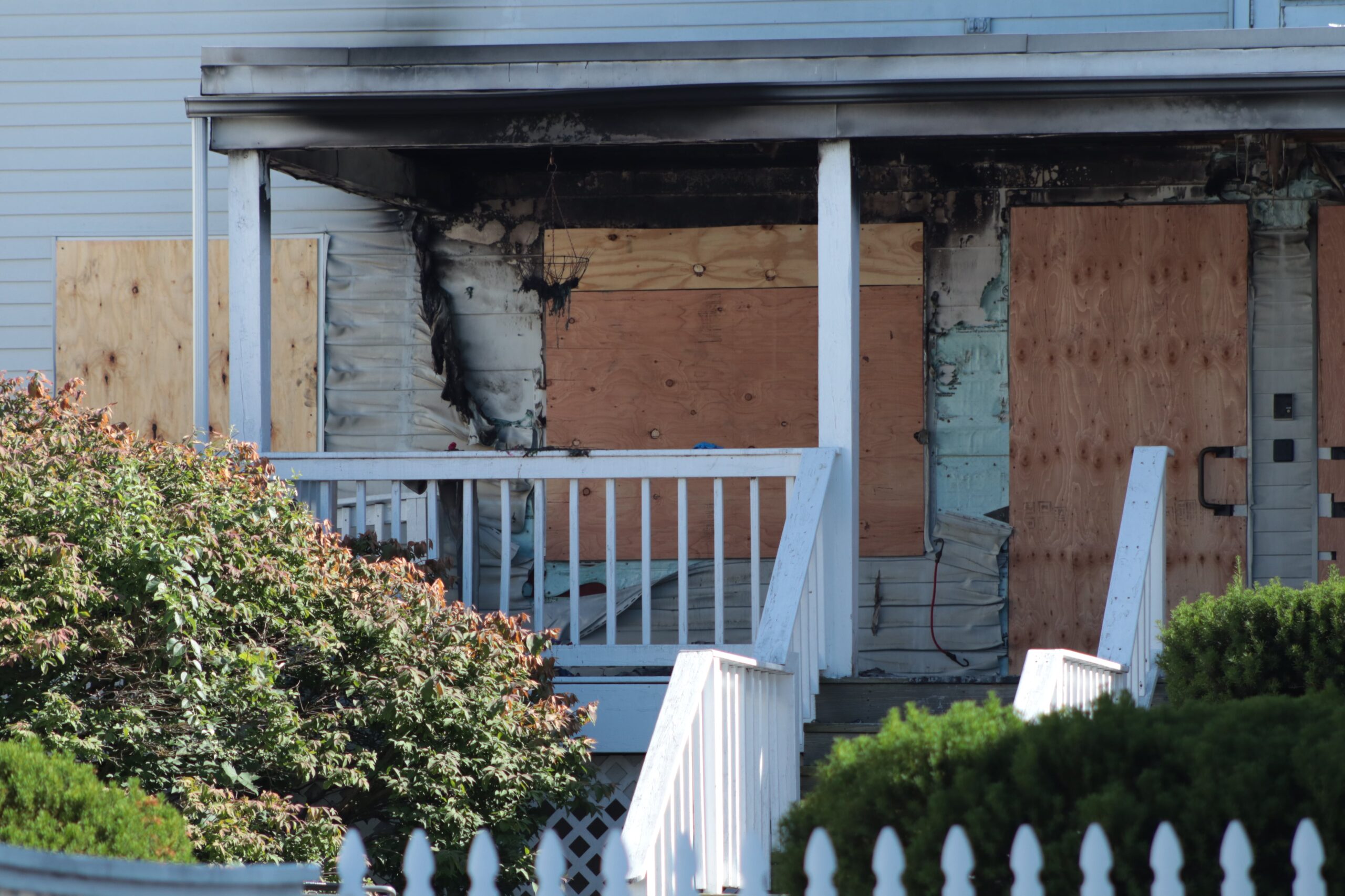
The Gabriel House assisted living facility in Fall River, on July 15, 2025, after a fire killed 9 residents on July 13. Another resident died a few days later. (Gustavo Atencio Flores/MassLive)
It took Balser eight years to see her legislation inspired by the Route 9 fire cross the finish line. In 2008, her bill closed loopholes in the previous fire code, requiring more buildings to install automatic sprinkler systems, specifically older buildings that are 7,500 square feet or more.
She persisted on another sprinkler bill for 10 years, but unsuccessfully. It would have given municipalities a local option to require sprinkler installation in the construction of new single and two-family homes. The effort continues this session through a bill filed by Sen. Michael Moore, D-Second Worcester.
What action will Fall River lawmakers take?
MassLive interviewed Fall River’s three House members about their plans for action after the July 13 Gabriel House assisted living blaze that killed 10 people and exposed statewide systemic failures.
Sen. Michael Rodrigues, D-First Bristol and Plymouth, declined to be interviewed for this story via a spokesperson.
The tragic fire and its aftermath have illuminated a buffet of issues across the state, and in some cases nationally, including:
- Loopholes in fire safety sprinkler inspections and an “honor system” — compounded by fire department staffing struggles — allow violations to slip through the cracks
- The continued presence of recalled, potentially defective sprinklers — specifically those manufactured by Central Sprinkler Company between the mid-1970s and 2001
- The majority of Massachusetts fire departments report being understaffed to the point they can’t meet recommended staffing standards set forth by the National Fire Protection Association (NFPA)
- A dearth of regulations for assisted living facilities — they are far less regulated than nursing homes and aren’t subject to federal regulations
- Challenges with maintenance and funding for the affordable assisted living model, one that relies primarily on public health care subsidies
It appears lawmakers are awaiting further direction from Healey and the Assisted Living Residences Commission, which is scheduled to release its recommendations for legislative and regulatory changes at the end of December. After the Gabriel House fire, the commission voted to extend its charge beyond Aug. 1 of this year to incorporate fire safety and emergency preparedness.
“I believe that the process right now is let this commission complete its work versus coming out and picking one piece of legislation that might be helpful,” Rep. Carole Fiola, D-6th Bristol, said. “Let’s do a comprehensive dive.”
Rep. Alan Silvia, D-7th Bristol, said he is “satisfied right now with what the governor’s office has done.”

Interior 3D imaging shows the aftermath of a five-alarm fire at the Gabriel House assisted living facility on July 13, 2025. (Courtesy of Matterport)
Rep. Steve Ouellette, D-8th Bristol, said he, too, was pleased with Healey’s actions thus far, and anything he’d consider filing personally would be monetary — more money for fire departments.
Since the July 13 fire, Healey mandated that all 272 assisted living facilities in the state submit emergency preparedness plans, which they have done. She also fast-tracked $1.2 million in funding for additional staffing to the Fall River Fire Department.
Under her direction, the Executive Office of Aging and Independence strengthened coordination between state and local authorities for assisted living fire safety inspections. Fire departments have also been notified of which facilities in the state need additional emergency planning and support, as self-reported via a survey.
- Read more: Healey vows necessary changes will be made ‘to ensure public safety’ after Gabriel House fire
During an interview with MassLive following the Nov. 25 Firefighter of the Year Awards in Worcester, Healey said her administration will look to build on the actions she took in the immediate aftermath of the fire, using the Assisted Living Residences Commission’s forthcoming guidance.
“They’ve worked hard, and that report and recommendations are due to me at the end of next month,” Healey said. “So I’m looking forward to receiving those recommendations, and we’ll be prepared to make any recommendations from there. And as you know, there are safety standards in place. They must be enforced. Everyone must comply.”
“But certainly open to looking at anything and everything that can be done to ensure the safety of our facilities,” she continued.
Some want to see action happening more quickly.
“It needs to be done faster,” said Mike O’Reagan, president of the Fall River firefighters union. “The wheels of government move very, very slow, and tragedies don’t wait for committees and politicians to argue.”
Like Balser, Sen. Michael Moore, D-Second Worcester, detailed the challenges of advancing proposals to strengthen fire safety codes because of lobbying resistance — unless calamity strikes. A member of the Joint Committee on Public Safety and Homeland Security, he has also penned sprinkler legislation several times.
The Cocoanut Grove (1942) and Station Nightclub (2003) fires are infamous in the U.S. for leading to widespread reforms to fire safety codes for public assembly buildings, such as multiple exits and exit doors that open out rather than in.
The Worcester Cold Storage fire in 1999, which killed six firefighters, changed how fire departments handle abandoned buildings.
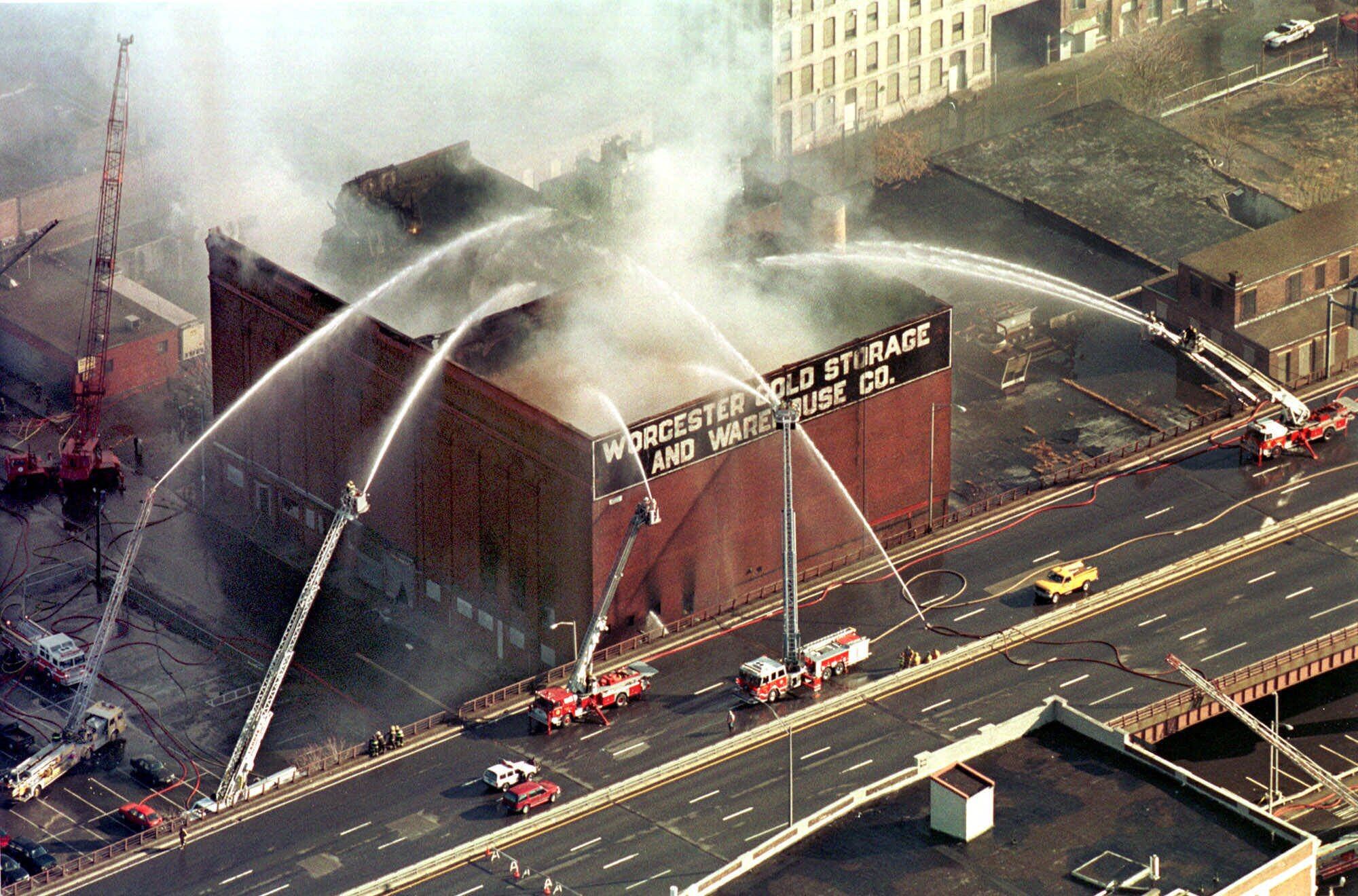
Firefighters spray water onto a general-alarm fire at the Worcester Cold Storage and Warehouse Co. in Worcester, Mass., on Dec. 4, 1999. Six Worcester firefighters lost their lives fighting the blaze. (AP Photo/Paul Connors)
Carbon monoxide detectors weren’t required in most residential buildings in Massachusetts until 7-year-old Nicole Garofalo died in 2005, when the furnace vents in her Plymouth home were blocked by snow. The measure is known as “Nicole’s Law.”
“What I’ve found over the years is that, sadly, it’s really about timing,” Moore said, “and if something happens like the Gabriel (House) fire, or a tragedy happens, the bill will draw the attention of everyone.”
Will legislators ‘go deeper?’
A national news cycle descended on Massachusetts in July when the five-alarm blaze struck Gabriel House, the former motel-turned-assisted-living-facility where approximately 70 residents lived. Police, fire and EMS personnel heroically rescued 53 people that night.
Ten people — ages 61 to 86 — died.
The sprinkler system in the building didn’t work properly on the night of the fire, including in the room where the fire started, sources have told MassLive. The system was also missing a critical internal inspection that’s required every five years, MassLive previously reported.
Numerous lawsuits have since been filed against Gabriel House owner Dennis Etzkorn, alleging negligence, code violations and facility mismanagement. An ongoing probe by the Bristol County District Attorney’s Office and Department of Fire Services will determine if there will be any criminal or civil actions.
Etzkorn has previously said he is fully cooperating with authorities and “all that matters right now is getting to the bottom of why this happened.”
Fiola told MassLive the Assisted Living Residences Commission is the “right place” to hash out the issues at hand, and she expects their recommendations will have “statewide implications.”
“Sometimes it takes a tragedy to remind us, or to bring to light, the gaps that need to be filled,” she said. “I think this commission is a good vehicle.”
Silvia echoed a recent recommendation made by a Fall River Fire Department report that assisted living facilities should be subject to the same regulations as nursing homes. He said the city’s delegation will “be continuing conversations to see what we can file to maybe enhance what has already been achieved (by Healey).”
The Fall River Fire Department’s October report also zeroed in on staffing concerns. These were echoed this month on the other side of the state by the Amherst Fire Department after a fire at a University of Massachusetts Amherst off-campus housing complex displaced more than 200 people.
Amherst Fire Fighters Local 1764 said the NFPA’s recommendation is to send 28 firefighters to a fire of that size. They responded initially with four.
Fall River firefighters have said that, according to NFPA recommendations, 42 firefighters should have responded to the Gabriel House within the first 10 minutes. Instead, they responded with 33 in the first 15 minutes.
During the Nov. 25 awards event in Worcester, Healey said both firefighter and civilian lives “depend” on adequate staffing on trucks.

Gov. Maura Healey visits the Gabriel House assisted living facility in Fall River on Monday, July 14, 2025, after a devastating fire killed nine residents and hospitalized 30. A 10th resident died a few days after the fire. (Irene Rotondo/MassLive)
She also boasted that Massachusetts has the lowest risk of fire fatality in the country. The numbers, however, have been on the rise — 51 people died from fires in 2024, according to the state’s Department of Fire Services, the highest number of fire-related deaths since 2017.
Ouellette, a former firefighter, said lawmakers will decide whether they need to “go deeper” on the changes already enacted. He floated more frequent and enhanced fire safety inspections, as well as additional state-level inspectors, as potential examples.
“All around we’ve got to change things and I can’t stress it enough,” Ouellette said, “it’s unfortunate that we have to babysit and spend taxpayer resources on buildings that should be kept up to code.”
Healey told MassLive her administration would first look at existing fire safety regulations to see how — and if — those are being enforced before considering additional measures.
“There are standards in place for every single community, for all facilities, and we expect people to follow the law,” she said.
Senator’s office declines comment
Rodrigues, the Senate representative for Fall River, did not provide a comment for this story, despite a MassLive reporter asking his staff multiple times if he intended to file legislation related to the Gabriel House fire.
But in a press release sent out by Healey’s office on Oct. 23, announcing next steps to enhance fire safety and emergency preparedness at assisted living facilities, Rodrigues was quoted as saying, “the safety of seniors who reside in assisted living residences is the top priority for all state and local public officials in the commonwealth.”
Calling the fire a “stark reminder of how we need to update and reequip these facilities that house vulnerable populations,” he thanked the Healey administration and her executive office secretaries for “responding swiftly to ensure that municipalities have the resources they need to keep our assisted living residences operating at the highest safety level.”