
The MBTA is emerging from years of underinvestment, officials said Thursday, but only because of a surge in state support that leaves the T more reliant than ever on Beacon Hill to hold on to its service gains and make further improvements.
In a presentation to the MBTA’s Audit and Finance Subcommittee, Chief Financial Officer Mary Ann O’Hara said the agency’s outlook hinges on unprecedented state support proposed for fiscal 2027, as structural deficits persist and final budget numbers remain uncertain until lawmakers act.
She outlined plans to taper recent spending growth to a more sustainable pace as the system shifts from recovery to long-term stability.
The board must vote by June 15 on the agency’s operating budget for fiscal year 2027, before lawmakers finalize the state budget, which is due July 1 but often slips into August.
It sets up a tricky dynamic for an agency whose service levels are being closely watched by the workers and employers who rely on the T.
“A critical point to note, the MBTA revenues in particular for this coming year are fundamentally dependent on the final state budget. We’re very dependent on the revenue we receive from the state,” O’Hara said.
That sequencing — the T approving its budget before knowing exactly how much aid it will receive — is a perennial issue. But O’Hara emphasized that “it’s particularly important this year,” given “the significant level of funding being proposed.”
Gov. Maura Healey’s fiscal 2027 budget proposal includes $1.1 billion in operating support for the MBTA across two bills, with $645 million from the income surtax on high earners. The package includes $470 million in state contract assistance, $122 million in surtax dollars for safety and federally mandated work, and $523 million to replenish the T’s deficiency fund and provide operating liquidity.
“With this funding — and this is an important point, assuming legislative approval, which is critical — we are funded through all of fiscal year ’27 and cash flow all the way through third quarter of ’28,” O’Hara said.
She added that given recent savings and deferred spending trends, the T “will most likely be able to operate through the entirety of fiscal year ’28, all things being equal.”
The surtax on wealthier households that voters approved in 2022 is spinning off significant revenues that may only be spent on transportation and education, but analysts say that revenue pot is subject to volatile swings depending on the stock market and larger economy. The new revenue source has become an important one for the T but there’s a constant struggle for those dollars between transportation and education interests, as well as the usual tension between MBTA and non-MBTA communities over fair access to transportation revenues.
The infusion could come as the T faces structural deficits its own revenues — fares and dedicated sales tax — cannot close on its own. O’Hara said net deficits have increased compared to last year’s projections.
“Starting in ’15 and ’16 sales tax has covered a substantially smaller portion or share of the MBTA expenses than originally what we expected. This persistent underperformance created significant deficits that have limited our ability to maintain preventative maintenance for many years,” she said.
Ridership remains below pre-pandemic levels, though fare revenue has begun to tick up. O’Hara said usage is about 72% of 2019 levels, peaking at roughly 76% last November — just before a 15-day closure of the Green Line’s central trunk frustrated holiday travelers.
The T’s reliance on state aid marks a sharp shift from the “anemic” T spending, as O’Hara described it, that defined much of former Gov. Charlie Baker’s administration.
O’Hara presented a chart showing operating expense growth from fiscal 2015 through projections for 2028. Between fiscal 2015 and 2022, expenses rose by “an anemic zero to 3% per year,” including “no growth” in fiscal 2017. Over that period, inflation averaged 2.6% annually.
“In practical terms, our spending barely kept up with the rising costs, and in some years, fell behind,” O’Hara said. “Over time, that level of constrained investment led to serious consequences.”
By 2022, those consequences were stark: derailments, a train car fire, 240 slow zones, and nine safety directives from the Federal Transit Administration. The agency was also chronically understaffed.
MBTA Board Chair Tom McGee zeroed in on that point, asking how many employees the T had in 2022. “5,600,” O’Hara replied. In fiscal 2027, the T is projected to have 8,250 employees.
McGee said the figure underscored the scale of the problem.
“You can’t run an agency that continues to grow and increase service and cut employees,” McGee added. “This is decades of underinvestment and understaffing.”
McGee also said the T’s capital and debt service “gets carried directly through the operating budget, so “when you look at it holistically” investments in the operating budget also help the T pay down its debt. The MBTA is heavily burdened by debt, including from the Big Dig highway and tunnel project.
“The state has given us money to pay down some of the Big Dig debt, and we’ve been doing that working with the state Treasurer’s office and A&F, so I do think A&F at the State House is trying to help us with that number,” he said. “When we talk about operating and how the growth of it is — it’s also reflective in a big way of the continuing investment we’re making on the capital side, and the debt we also carry from the Big Dig debt.”
Beginning in fiscal 2023, spending growth accelerated. From 2% growth in fiscal ’22, spending rose to 5% in fiscal ’23, 11% in fiscal ’24 and 11% again in fiscal ’25. The T expects 8% growth at the end of fiscal 2026 and 9% in fiscal ’27. This jump aligns with when Healey took office.
O’Hara said the increase was driven by two factors: investments to address safety and comply with federal directives, and new collective bargaining agreements aimed at stemming attrition and attracting workers after pandemic-era departures.
Headcount, which hovered around 5,800 from fiscal 2015 through 2022, is projected to reach about 8,250 in fiscal 2027. O’Hara said the goal is to end fiscal 2026 with 7,700 employees.
Had staffing grown by roughly 3.5% annually beginning in fiscal 2016, she said, “we could have reached today’s staffing target… a lot earlier in fiscal year ’22,” potentially avoiding some safety crises that triggered federal intervention.
The spending surge between fiscal 2023 and 2025 — including double-digit growth in some years — helped eliminate the 240 zones where trains had to operate at reduced speeds, implement the Green Line Track Improvement Program, expand service with the Green Line Extension and South Coast Rail, and redesign the bus network.
On the Orange Line, weekday trips are up 91%, and headways are down 54% during peak hours. On the Red Line, weekday trips are up 67%, with peak headways reduced 22% on the trunk and 48% on branches. The Blue Line has seen a 36% increase in weekday trips and a 17% reduction in peak headways.
The T has also expanded late-night and weekend service and begun installing and testing the Green Line Train Protection System.
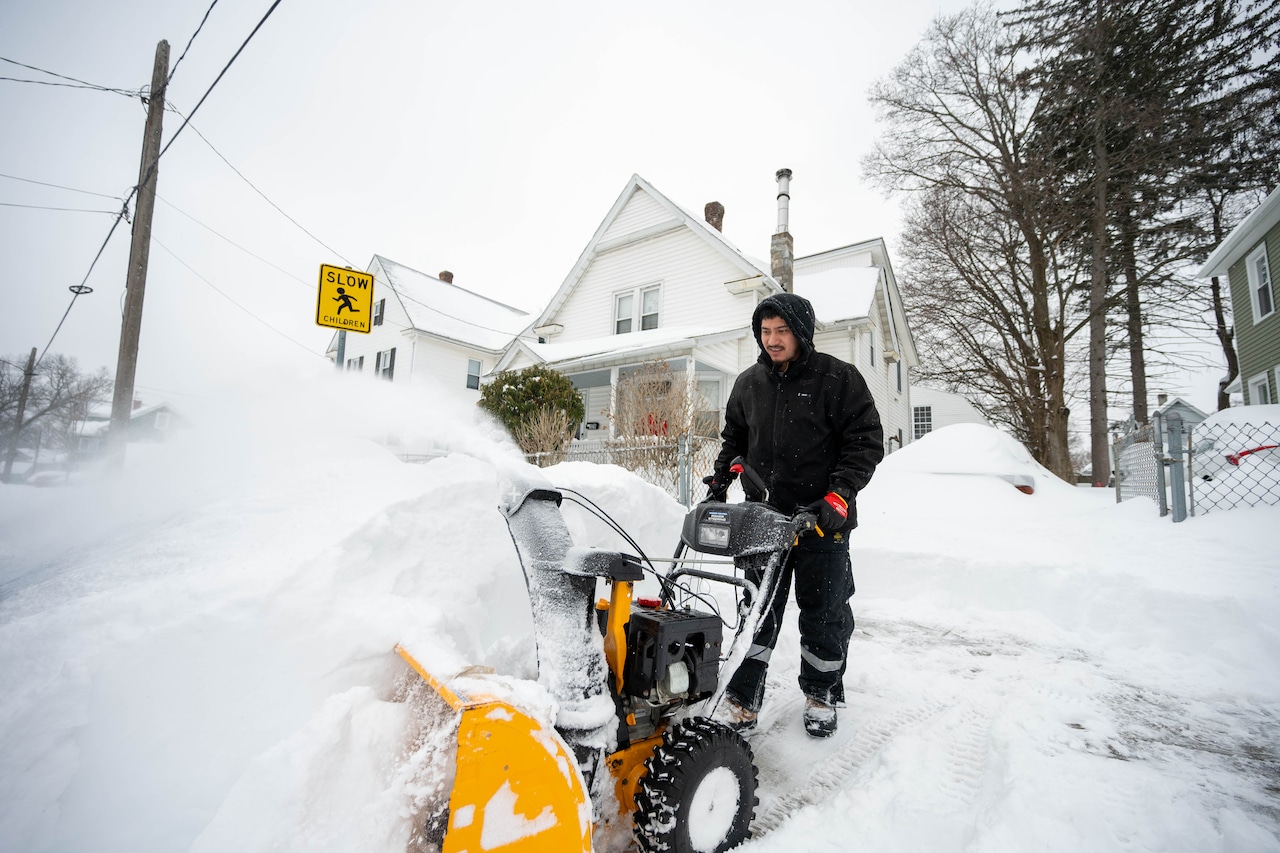
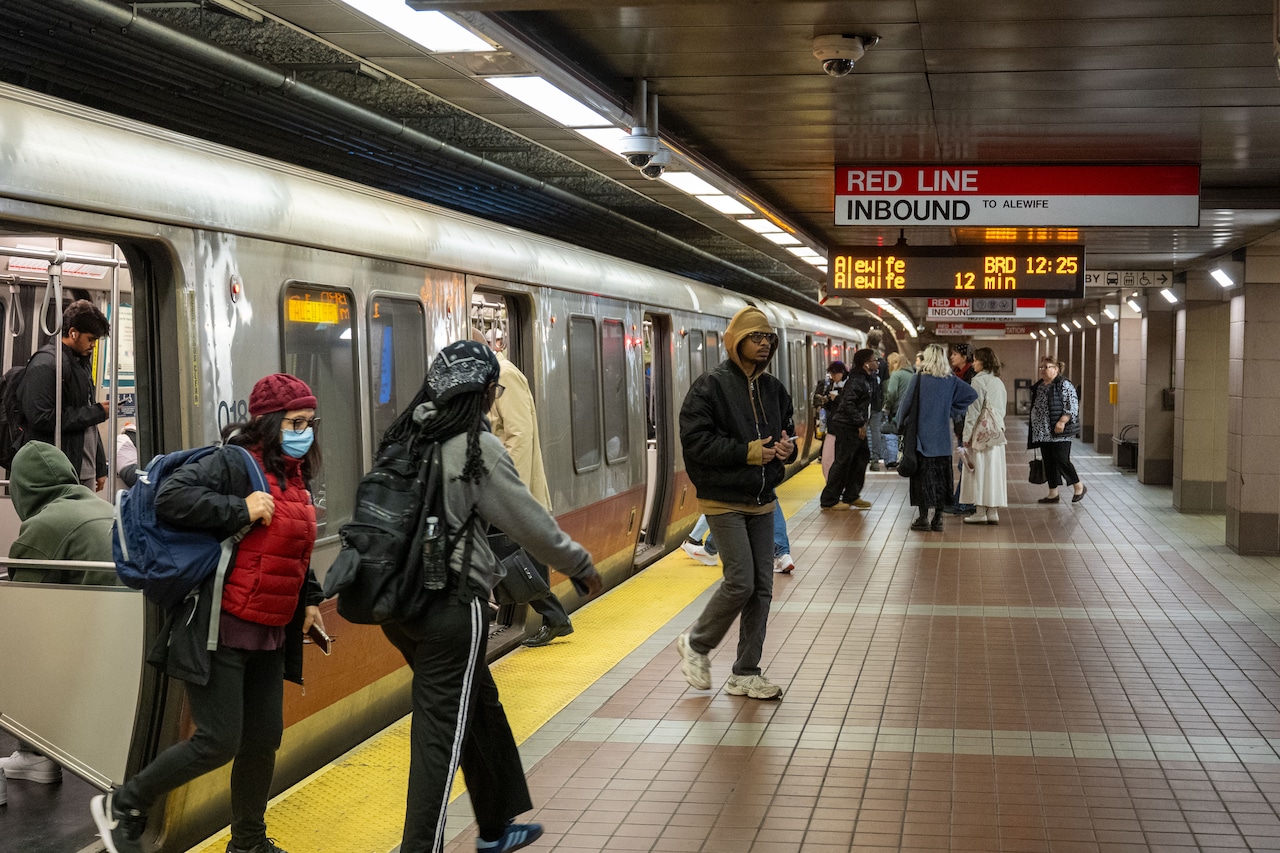
Still, service reliability remains fragile. Winter storms and single-digit temperatures have tested the system in recent weeks, particularly the Red Line, where older cars struggled in the cold. Riders reported waits exceeding 30 minutes and packed platforms. The T was forced to respond to reduced service and equipment issues.
“We’re in the recovery,” O’Hara said. “‘We sort of anchored to what happened with the FTA, and then we had to spend to recover and get through that.”
But she stressed the agency does not intend to sustain such significant expense growth.
“If you look at ’27, ’28… you can see we were at like 8, 9%, and I expect in later years as the recovery starts to end that will moderate to 4 or 5%. But we can’t go back to zero to 3%,” she said.
The goal, she said, is to shift “from rapid expansion to operational efficiency and continued disciplined spend management.”
Since last February’s financial report, the T has revised headcount targets downward by 330 positions, and O’Hara said the agency is on track to exceed its original $82 million savings target, with projected savings and deferral of costs totaling $141 million. Initiatives include using drones for tunnel inspections, bringing repairs in-house, digitizing vehicle inspections, and overhauling buses and railcars internally to reduce turnaround times.
McGee said the recent spending increases were “absolutely necessary,” but cautioned the work is far from over.
“We’re really making really good progress,” he said, “but there’s still a ways to go to take this on.”