
A fire safety expert from Worcester Polytechnic Institute has warned that improperly maintained Christmas trees can ignite and engulf an entire room in minutes.
“These trees can, if they’re dry, they can go up very, very quickly and very rapidly and cause involvement of a lot of other surrounding materials,” said Sophia Quattrini, a researcher at the WPI Fire Laboratory. “That’s quite scary because you could be in a room that’s perfectly fine, it ignites, and minutes later the entire room can be engulfed.”
The National Fire Protection Association (NFPA) reports approximately 145 fires annually caused by Christmas trees, with more than 800 additional fires attributed to other types of holiday decorations. While Christmas tree fires represent a smaller portion of holiday-related blazes, they present serious risks due to how quickly they can spread.
Multiple factors can contribute to tree fires in homes.
“You might have it a little bit too close to a radiator, too close to a heater, that could cause it to ignite. Any sort of candle fault and wiring of lights, all of these things could cause ignition of a tree,” Quattrini said.
Old or damaged light strings represent a particular concern.
“Old lights, a lot of old lighting, not realizing that there’s maybe a little bit of a tear in the cord. If one of the light bulbs isn’t all the way in, it was to arc or have some sort of electrical short, all of those things could kind of ignite it,” she warned.
Quattrini recommends several preventative measures to reduce fire risks. Proper tree placement is essential:
“So ideal location of a tree, you’re going to be three feet away from any sort of heaters, radiators, anything that’s really going to be generating heat. You also want it not in front of any sort of exit and in a place where the wire isn’t going to get damaged.”
She also advises using newer lighting technology.
“LED lights are going to generate a little bit less heat. When you purchase lights, you can also look on them that they have been approved by any sort of official laboratory that they’re mistake as well,” Quattrini noted.
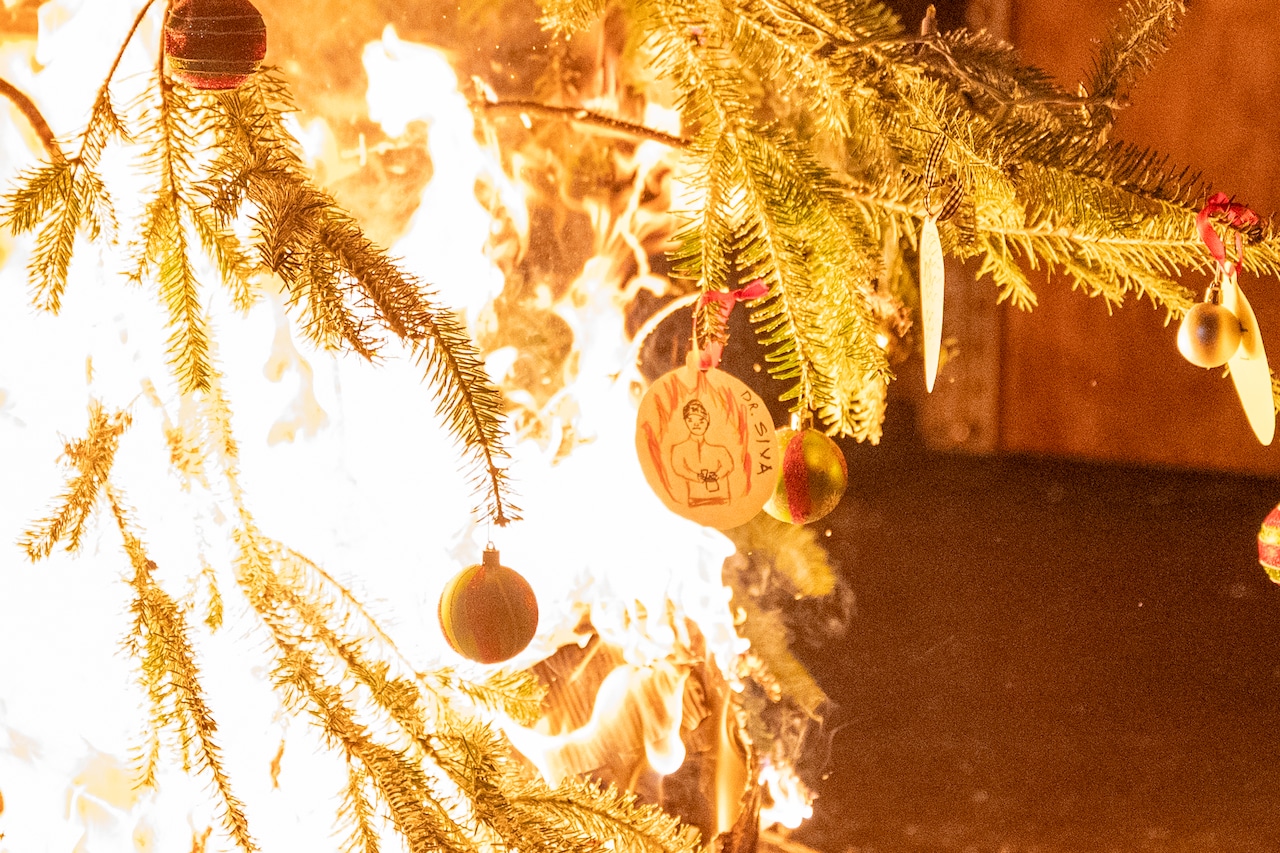
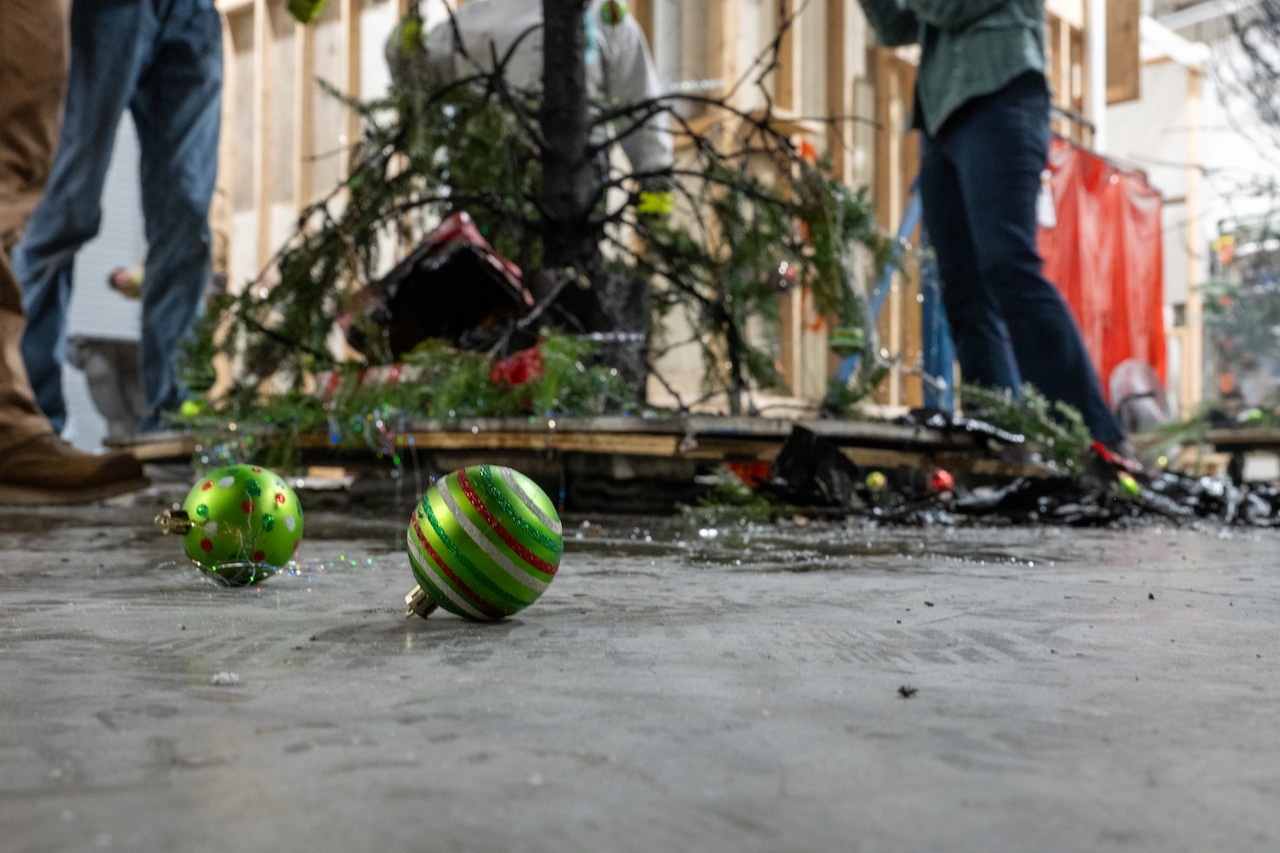
The research team at Worcester Polytechnic Institute conducts controlled burns of Christmas trees with various decorations to better understand fire risks and educate the public.
“I think it’s just to help us get a better idea of what we’re looking at with different types of decorations. And also just so people know what kind of things that they’re bringing into their home,” Quattrini explained.
The laboratory tests provide visual demonstrations of how rapidly dry Christmas trees can ignite and spread fire throughout a room, underscoring the importance of proper tree maintenance and placement.
“If you’re going to have something in your home, you want to know how safe it is,” Quattrini emphasized. The research aims to help families make informed decisions about holiday decorations while maintaining festive traditions safely.
As the holiday season approaches, fire safety experts remind households to regularly water live Christmas trees, inspect light strings for damage before installation, keep trees away from heat sources and exits, and never leave tree lights on when unattended or while sleeping.
By following these basic precautions, families can significantly reduce their risk of experiencing a Christmas tree fire and ensure a safer holiday celebration.