
WESTFIELD – After a financial overview by Westfield Chief Assessor Ashlie Brown at a special meeting on Dec. 4 at 6 p.m., the City Council voted 8-4 on a motion by Councilor Cindy Harris to send back a request to Mayor Mike McCabe for up to $3 million in free cash to be used to defray taxes.
The council also voted to schedule a special meeting on Dec. 9 at 5 p.m. to vote on the tax shift. Voting against the motion were Councilors Ralph Figy, Brent Bean II, Michael Burns and Nicholas Morganelli Jr.
At the regular City Council meeting that followed at 7 p.m., the Council tabled its vote on the tax shift, the percentage of the tax levy to be borne by residential and commercial/industrial properties, until the special meeting on Dec. 9.
Figy, who chairs the Finance Committee, said earlier that he already made the request to the mayor. “I did reach out to the mayor and ask him to utilize free cash,” he said. “The mayor stated that he’s not going to utilize free cash, that it’s not advisable as good fiscal management.
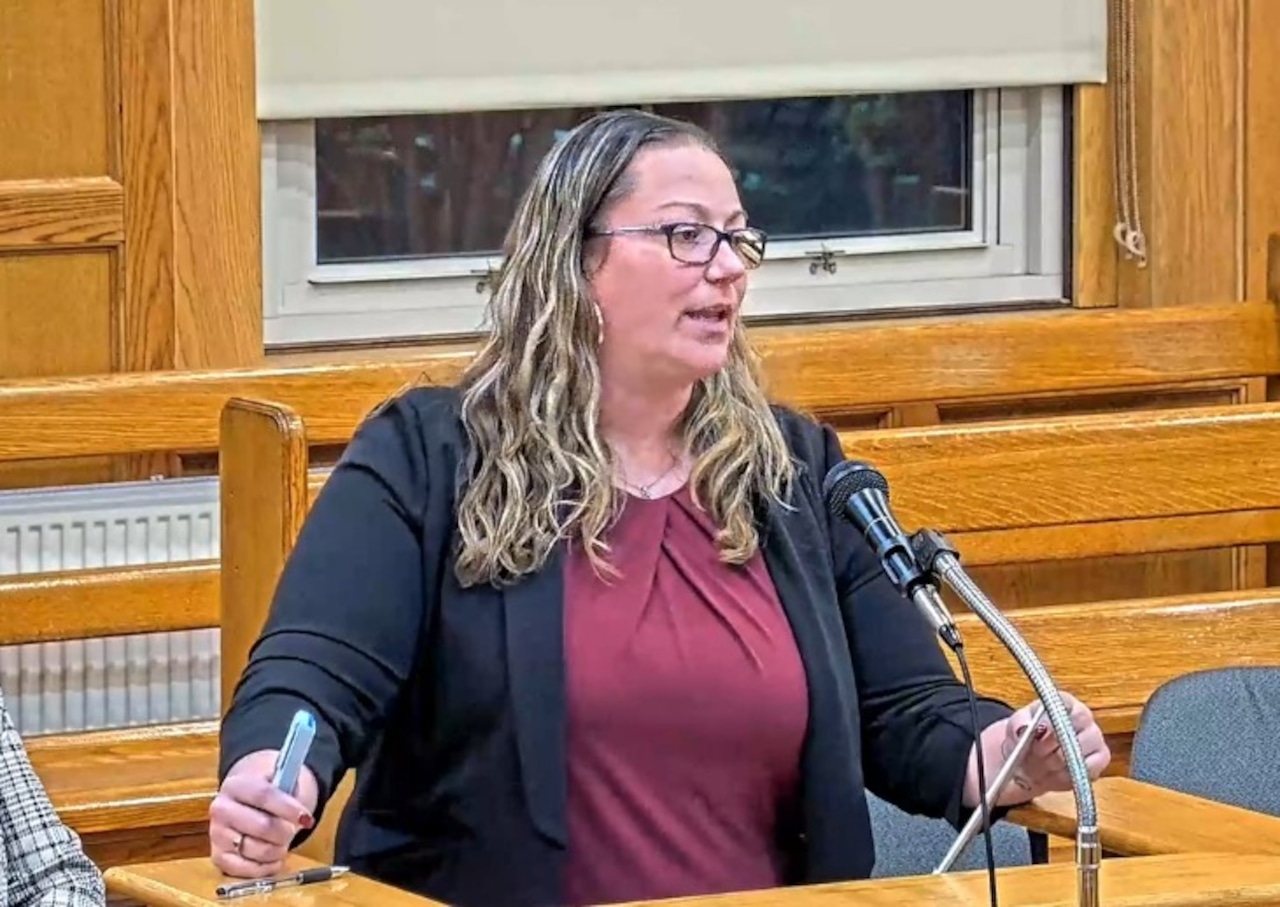
During her presentation, Brown had also advised the City Council against the use of free cash, which she said creates a roller coaster effect on taxes. She said taxes are projected to increase this year, in part due to past use of free cash, with the average residential tax bill expected to increase by $381 for the year.
Brown said if free cash is used to artificially reduce taxes this year, it could lead to a revenue gap and spike the next year, creating instability and taxpayer confusion. She said free cash fluctuates and should be used for capital improvements and one-time expenditures, while stable revenue, such as property taxes and new growth, should be used to offset taxes.
“Using free cash to artificially lower the tax rate … is not sustainable in the long term,” Brown said. Brown’s full presentation on the fiscal year 2026 classification packet is available at www.cityofwestfield.org under the Assessor’s Department.
During the discussion, Councilor Richard Sullivan Jr. asked Brown how much Westfield is below the levy limit. Brown said $9.9 million below the actual limit, to which Sullivan said they are well below the limit.
Sullivan also said, looking at the historic trend in new growth, the city is at a low point at $626,000. “Just in this body, if that number [were] higher, we would not be looking at the increases,” he said.
Brown said new growth should always be used to offset increases.
“At the end of the day, all the general public really cares about is the tax bill. The city has to have a plan for that. You can’t say no to economic development and not expect a cost,” Sullivan said.
Morganelli asked Brown about the new growth chart, and between residential and commercial over the last five years, which had declined more sharply. Brown said Westfield had no new industrial growth this year, and minimal commercial growth, while residential grew.
Morganelli said to make Westfield more fiscally desirable, they would want to see continual growth on the residential side, but asked what would attract businesses to Westfield as far as the tax shift, which Brown declined to answer. “As far as business growth, we need to see those red bars go back up,” Morganelli said.
“I know we’ve used free cash. Over the last 10 years, we’ve kept the taxes low because we’ve used free cash,” said James Adams.
“Assuming next year you’re going to have it,” said Brown. “You’re assuming you’re going to have enough free cash available, there’s no way to know that … Free cash has a negative effect on long-term stabilization.”
“It doesn’t seem like it’s going down,” Adams said.
Allie said for a number of years, the free cash was filling the gap of $2 million made by not collecting enough on the trash fee to cover the costs.
On May 1, the City Council voted 9-3 on an ordinance increasing the refuse and recycling fee to $260 per year, an increase of $175 from the previous fee of $85
“People were frustrated it was all at once,” said Brown.
Also speaking at the hearing was Amanda Waterfield, executive director of the Chamber of Commerce, who asked that the percentage of the tax shift be moved more favorably for businesses. “The primary impact of the rising property values burden hits business owners twice as hard as residential owners. For many commercial entities, profit margins are razor-thin,” she said, citing health insurance costs among others, squeezing businesses to the breaking point.
Waterfield said commercial owners are paying almost twice as much as residential homeowners. She also said she has heard the mayor say several times that he is opposed to free cash being used in the budget.
“I respect your dedication. What would be attractive to businesses is a lower tax rate and having places for employees to live. I ask you on behalf of the business community to approve a 1.61 tax shift,” she said. Last year’s tax shift was 1.65.
In making her motion, Harris said she would be requesting a tax shift of 1.70, in favor of residents. No other numbers were mentioned at either meeting.
Sullivan said that the $3 to $4 million voted on and not spent in the previous budget, largely due to unfilled positions, should be used. “I do believe the money that hasn’t been spent but was taxed should be going back,” he said. “We knew there was going to be free cash that would be carried over; we weren’t taking a risk,” he said.
“I’d just like to remind everybody, when we budget a position, we must budget for a full year. We also get back $1 million from dispatch every year, but we must spend it in the budget,” Figy said.
Adams said that last year, the mayor was also opposed to using free cash. “Last year, the mayor said the same thing, and we sent it back to him. Let him tell the residents.”
After a discussion on whether to postpone the tax shift vote and schedule a special meeting, Brown warned that a postponement gives the city little time to prepare tax bills. “We are later this year. We must get the bills out by Dec. 31. We’re really close,” she said.
Before calling the vote on Harris’ motion to send the request back to the mayor for up to $3 million in free cash and to schedule a special meeting on Dec. 9 at 5 p.m, Council President John Beltrandi, III said he had also spoken to the mayor about using free cash. “I did have a conversation with the mayor this morning – he was adamant he’s not going to,” he said.