
What really happened when 19-year-old Tanzerius Anderson shot and killed Inaam Yazbek on March 25, 2000 has been clouded by lies for years.
But Anderson, now married to former Boston City Councilor Tania Fernandes Anderson, continues to take full responsibility for the man’s death.
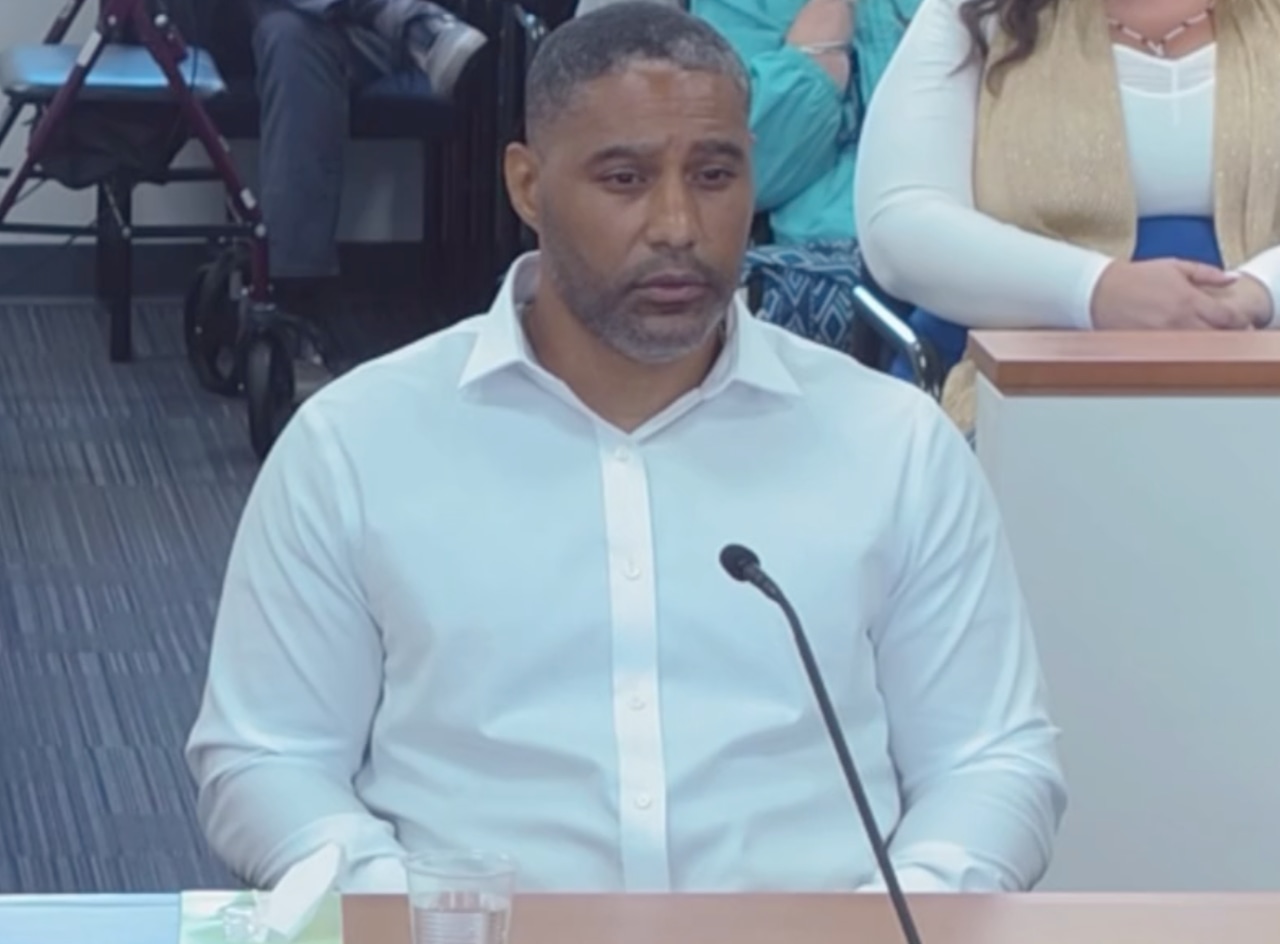
“I’m filled with grief. There’s nothing I can do to return the beloved family member. I only have my sincere contrition and obligation to repair as much as possible any fractures my deplorable behavior has caused,” he said during his parole board hearing on Aug. 12.
When Tanzerius Anderson was 19 years old, he was playing video games and smoking cannabis with a group of people when 16-year-old Joleena Tate asked him if he wanted to “rob someone,” court documents state.
Tate said she knew a Lebanese immigrant, later identified as Yazbek, or “Yaz,” who carried a lot of cash. She also said he was a “passive” person who would not “put up a fight if ever approached,” court documents state.
Tate and Yazbek went out to eat at a restaurant in Watertown. Afterwards, Tate asked him to drive her to the designated location and, using his cell phone, sent “1145“ to one of the group member’s pagers to signal when she would be at the appointed meeting place.
When the two arrived, they saw Tanzerius Anderson in the hallway, and Tate announced they were being robbed. She then walked away as Tanzerious Anderson led Yazbek by his arms back into the building.
Yazbek tried to plead with the group. At some point, Anderson became “nervous” and shot the man in the back of the head, court documents state. It was the first time he had ever used a gun, he told the parole board.
The 16-year-old told police that Tanzerius Anderson said, “I got my body for the summer,” after they ran from the building to a car.
However, she later admitted to telling lies about what happened, his lawyer, Lisa Newman-Polk, said during a parole board hearing.
That statement, she said, was fabricated.
“In the process of being interviewed, scared, under the power of officers talking to her, facing her own joint venture on a life sentence, was exaggerating to make him seem much worse than he seemed,” Newman-Polk explained.
In fact, both witnesses “were highly, highly problematic throughout the entire trial,” she said. During cross examination at the trial they admitted to lying multiple times.
Still, Tanzerius Anderson now admits to his part — shooting the gun and killing the man.
He explained that after he shot Yazbek, he turned and started running. He had no idea he had just killed him.
He was sentenced to life in prison without the possibility of parole. However, in 2024, the Supreme Judicial Court decision stated emerging adults between the ages of 18-20 cannot be sentenced to life in prison without the possibility of parole in Massachusetts.
The high court ruled that life sentences for defendants within that age group are unconstitutional and amount to “cruel and unusual punishment.”
Due to the decision, Anderson, currently in Northeastern Correctional Center (NECC), was allowed to go in front of the parole board for the first time.
The board asked a lot of questions that caused him to reflect on what happened that night, despite the lies and the drugs involved.
He blamed his decisions on living moment to moment and not thinking.
“If I could have had a moment to stop and think, there’s no way that night would have unfolded the way it did,” he said.
But that isn’t what happened.
“At the end of the day, if I don’t go there that night, if I don’t take that gun, if I decide just to go home and don’t show up in that hallway, none of this ever happens,” he said. “So it’s really not on anyone except for me.”
The parole board was impressed with the work Tanzerius Anderson has done.
“You certainly have done a tremendous amount of work. Tremendous. And nobody can take that from you,” one of the board members said.
This has included numerous programs, including starting his own yoga program.
He also married Tania Fernandes Anderson while he was in prison. In May, she pleaded guilty to corruption charges and is scheduled for sentencing on Friday.
The two met because of a “chance encounter in 2011″ when she ran into Tanzerius Anderson’s family, according to Boston Magazine.
She had remembered him as the brightest in their class and began writing to him, the magazine wrote. They talked about everything from religion to quantum physics to politics.
“We fell in love,” she told the outlet, and they got married in 2013.
“My friends asked me, ‘Why, you have nothing with him, nothing physical, no support?’” she told Boston Magazine. “But when you know he is your person, you know. How dare I reject destiny?”
Other family members, including his mother, and close friends also continued to support him during his time in prison.
“Though he spent more time in prison than he has out in the world, he’s consistently taken responsibility for his growth and healing,” Shana Turner said, describing herself as chosen family.
She’s also looking forward to Tanzerius Anderson’s possible future.
“I believe with my entire being that Tanzerius will do amazing things with the rest of his life. Having the opportunity for those things to happen outside of prison with the support of his many loved ones will be a blessing that will undoubtedly positively affect the lives of many,” she said.
But Ray Yazbak, the brother of the man who was killed, walked out before the parole board hearing was over, hurt by reliving the past.
“Unfortunately, today’s hearing made that pain even worse,” said John Verner, assistant district attorney at Suffolk County District Attorney’s office.
Ray Yazbak felt through the conversation and the parole board telling Tanzerius Anderson he had done a good job, his side wouldn’t get fairly heard, Verner explained. And he left.
Ray Yazbak’s parents don’t know Tanzerius Anderson is up for parole and haven’t heard about the law change. He doesn’t know how to tell them.
“This will break their heart,” he told Verner.
Through a statement, Verner tried to show the parole board Ray Yazbak’s pain.
“He ruined my life and my family’s life,” he said in the statement. “My mother hadn’t seen him for 10 years. Because of him, he was sent back to her in a wooden box. I don’t need or want his apology. I have no forgiveness for him.”
Verner said that during the parole board hearing that the “critical, worst parts of this crime are minimized.” And the district attorney’s office feels his story does not match up with what happened.
But Newman-Polk explained the situation and the people involved are complex.
“As I think the board knows, people are not black and white and very few would fit the definition of just plain evil,” she said. “I understand as much as I can why a victim’s family would want to view Tanzerius in black and white terms as just an evil person who purposely executed an innocent man. However, that is not what happened.”
She described the situation as a “high stress, highly spontaneous, impulsive situation that went sideways very quickly.”
“The crime just doesn’t make any sense,” the lawyer said, describing the lack of violence before and after the crime. “But we do know Mattis, Diatchenko and that young people do things that don’t make sense.”
The parole board has not made a decision as of Thursday. It typically takes months before decisions are made.
If you purchase a product or register for an account through a link on our site, we may receive compensation. By using this site, you consent to our User Agreement and agree that your clicks, interactions, and personal information may be collected, recorded, and/or stored by us and social media and other third-party partners in accordance with our Privacy Policy.