
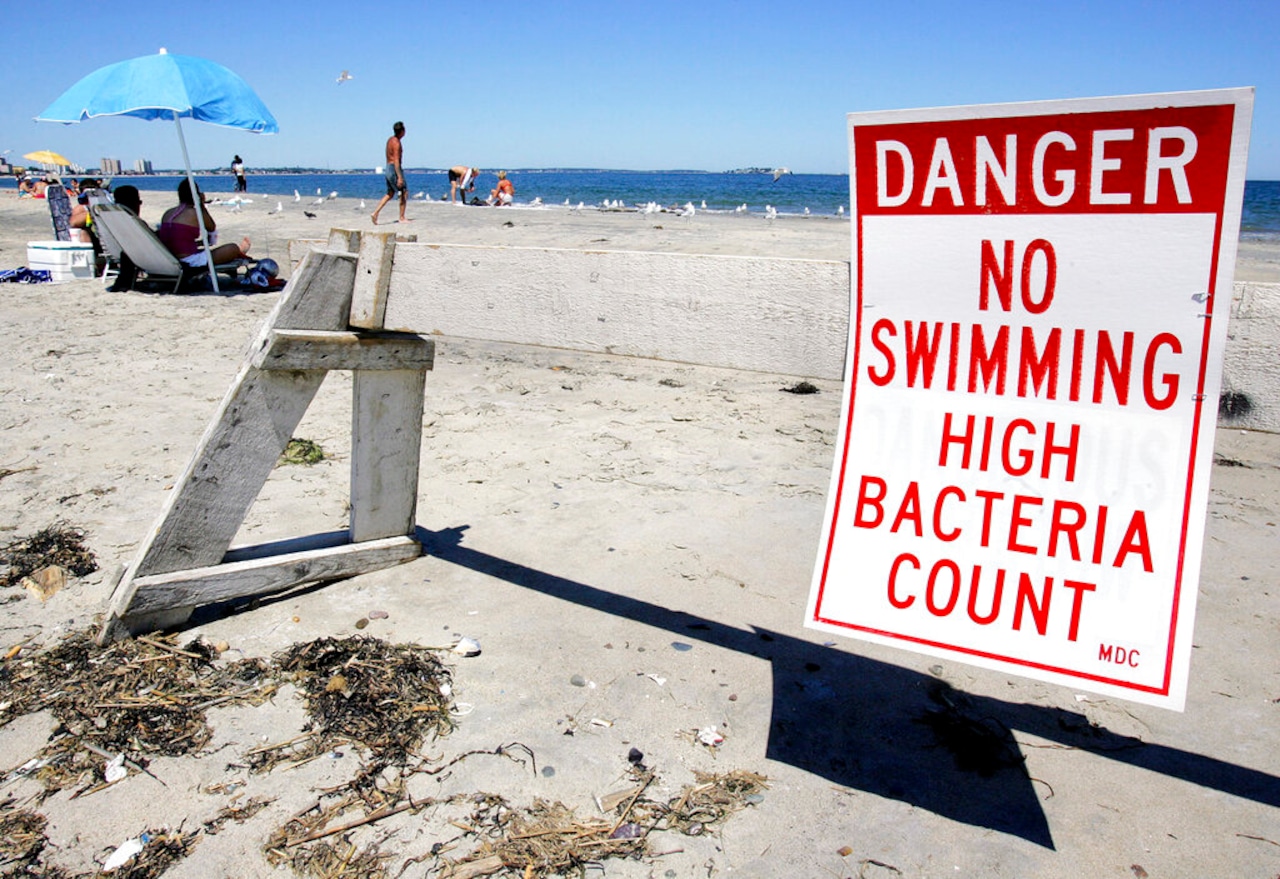
On a warm and dry summer day in Massachusetts, more than 50 beaches across the state were closed, primarily due to bacteria in the water, according to the state’s publicly available water quality dashboard.
In all, 54 beaches were closed as of the 12:30 p.m. update to the dashboard on Saturday.
The closures spanned from Amherst in Western Massachusetts to Worcester to beaches on Cape Cod. Of the 53 beaches closed in the state as of Saturday afternoon, most were attributed to an excess of bacteria in the water.
The remaining closures were attributed to harmful cyanobacteria blooms, sewer system overflows and simply “other” reasons. Some beaches, including Cochituate State Park Beach in Natick, listed multiple reasons for their closure on Saturday afternoon.
In Amherst, both Puffers Pond and Stanley Street swimming hole were closed due to excess bacteria. Bass Pond in Springfield was also closed, with the dashboard listing a harmful cyanobacteria bloom as the culprit.
A total of four Worcester beaches were closed Saturday afternoon — Indian Lake Public Beach, Lake Park Beach, Regatta Point Beach and Shore Park — with cyanobacteria blooms blamed for the closures at both Indian Lake and Shore Park.
In the eastern part of the state, four beaches in Salem were closed on Saturday. The back of Children’s Island beach as well as Ocean Avenue and Willow Avenue beaches were closed due to excess bacteria. Camp Naumkeag was closed simply due to “other reasons.”
On the Cape, Longnook Beach in Truro was closed — and may remain closed the entire summer — due to safety concerns from eroding cliffs. On Nantucket, Sesachaca Pond was closed due to a cyanobacteria bloom on Saturday.
“If a beach is closed, do not swim or enter the water at that location to avoid risk of illness,” the dashboard warns.
The dashboard is updated twice a day, once in the morning and once in the afternoon, and shows the results of recent water quality tests at beaches across the state. More than 1,100 public and semi-public beaches in the state are regularly monitored.
And despite the closures, state officials say the beaches are still perfectly safe for recreational activities aside from swimming.
The full list of closures is below. If you can’t see the chart, click here.